
PADI: A GLOBAL LEADER IN SCUBA DIVING
When I think about PADI Divers, PADI Members and our global team of employees, I reflect on the culture of our organization. As a group, we have a rare ability to blend different personalities, talents and backgrounds to create a high-performing, thriving culture, continually transformed by an organizational “alchemy.”
I have seen this remarkable team synergy adapt and renew itself over the decades. PADI employees, PADI Members and PADI Divers form a blend of diverse individual talents that create a spectacular combined result greater than the sum of its parts.
This global PADI “diaspora” has come together into a thriving, innovative environment. PADI Members and divers around the world show resilience, with a proven ability to turn adversity into opportunity. Together, over the years, we have faced many major setbacks and market shifts, yet we have turned each of them into an advantage. Thanks to this PADI network effect, PADI is strong and operates as a global ecosystem.
Six Reasons Why PADI Is the World’s Largest and Most Successful Diver Organization
1
Being part of the PADI community offers distinct advantages in size and impact.
Belonging to something bigger than each of us as individuals is empowering. PADI is a global network of PADI Professionals that has issued 30 million PADI certifications, with hundreds of thousands more added every year. These professionals make up the largest and strongest professional dive membership network in the world.
PADI does not directly employ most of the people who “embody the PADI brand”; rather, our culture is a constant blend of:
- Independent business owners: more than 6,600 privately owned dive centers and resorts operating in very different local cultures and economies.
- Individual professionals: 128,000 PADI Instructors, Assistant Instructors and Divemasters with very diverse personalities, teaching styles and languages.
2
We change people’s lives for the better, and forever.
Thanks to our “alchemy,” PADI has the unique ability to bring together very diverse cultures and people and align them under a standardized diver training and educational safety program. That is why a PADI Instructor in Egypt and another in Japan deliver the same fundamental experience with global applicability, while adapting and localizing it to the local culture and conditions.
On an individual level, PADI culture is built on the concept of transformation: taking ordinary people and positively transforming the way they interact with the planet and the ocean.
- Overcoming fear: PADI Professionals take novices, teach them to breathe underwater and/or to freedive, and turn them into confident explorers.
- Lifestyle change: PADI culture frequently turns casual tourists into passionate ocean advocates, or into professionals who completely change their career path to open a dive center or a resort, or to pursue exploration through technical diving.
3
We operate by a creed.
The PADI Professional’s Creed. Years ago, I co-created a formal code of conduct built into the PADI Instructor Manual. It unites us as a culture, ensuring that an independent dive guide in Fiji and a dive resort in Bonaire operate with the same philosophical commitment to human transformation and excellence. It reminds us to view teaching and leading divers not as transactions, but as transformational human experiences that we create through thousands of decentralized dive centers worldwide.
4
We shape PADI Divers into ocean ambassadors.
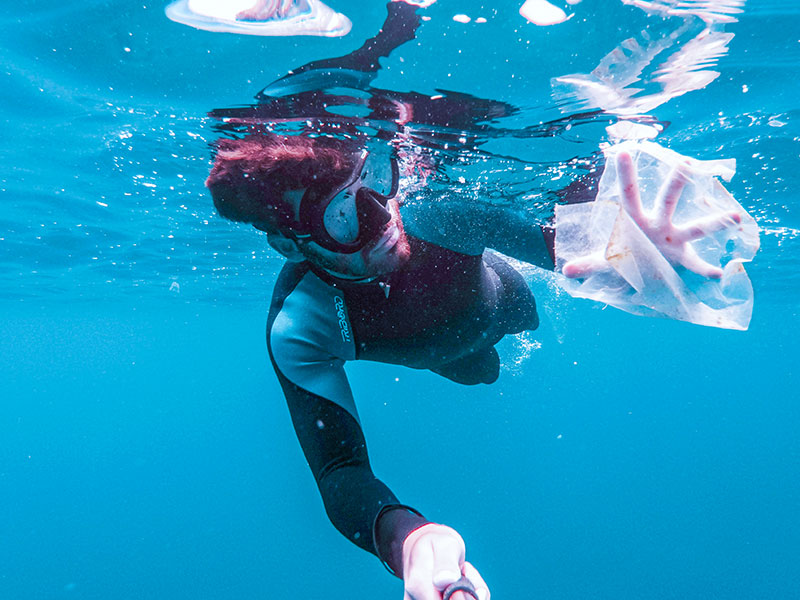
By blending the vast PADI membership network with the PADI AWARE Foundation, together we mobilize millions of divers into a global force for marine protection. Fundamentally, our purpose-driven lifestyle brand ecosystem has turned dive tourism into an interconnected, positive global social movement for ocean change. Divers can take part in meaningful citizen science and record real data on marine debris or shark and ray counts while diving at PADI Adopt the Blue – Eco Centers.
5
We have built the PADI brand ethos on the pillars of ocean change.
PADI pivoted its identity at its 50th anniversary in 2016, moving from a strict certification agency to a global, mission-driven lifestyle brand under the banner “Seek Adventure. Save the Ocean.”, restructuring the way the PADI AWARE Foundation integrates with local dive centers to turn passive recreation into active ocean conservation. By establishing this ethos and turning PADI’s footprint into a mechanism for positive global change, together we are effectively transforming a group of casual divers into a billion ocean torchbearers who keep making a meaningful, positive and constructive difference as a community.
6
PADI’s training and education principles are forged from student-centered instructional design.
PADI’s modern curriculum is designed and built around one fundamental student-centered pillar: performance-based (not time-based) student progression. Long ago, we eliminated arbitrary time requirements and standardized the performance-based PADI educational system. Within the PADI System, and under the qualified instruction of a PADI Professional, scuba students progress only when they can comfortably and demonstrably perform a safety skill, no matter how fast they learn. This reduces anxiety and keeps opening the ocean to millions of people who might once have given up, or never even tried diving. Diver safety is the number one priority – delivered through valid student-centered instructional design and sound leadership judgment – and it is therefore the cornerstone of PADI’s 60 years of growth and success.
PADI’s unique alchemy in putting these six reasons into practice is what makes PADI a purpose-driven, world-changing organization. The global PADI organization is entering an era in which, by building our integrated unity, professionalism and dedication, we will do even more to transform lives and save the ocean, better and more effectively, for more people.
PADI (Professional Association of Diving Instructors) is the world’s largest scuba diving training organization. Present all over the world, it relies on internationally recognized training standards that emphasize individual progression, skill mastery and diver responsibility.
Unlike some approaches shaped more by a French national regulatory tradition, the PADI model follows an international approach, based on shared educational standards, skills assessment and the diver’s progressive autonomy.
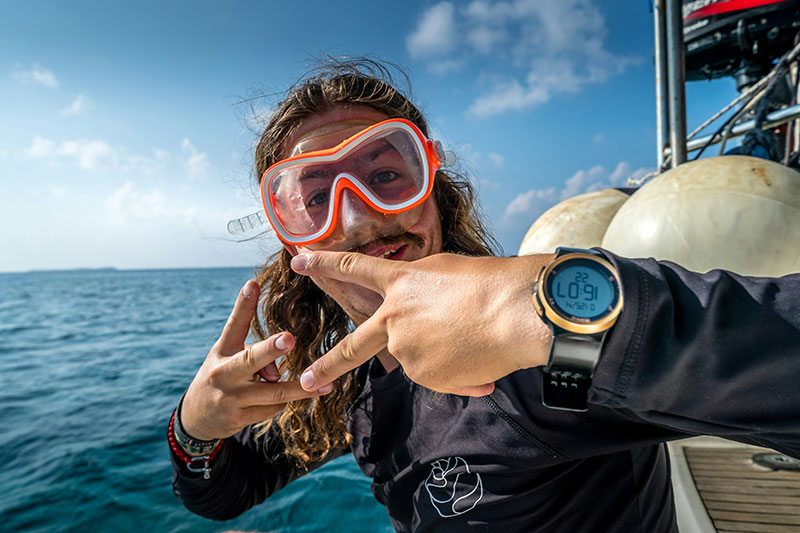
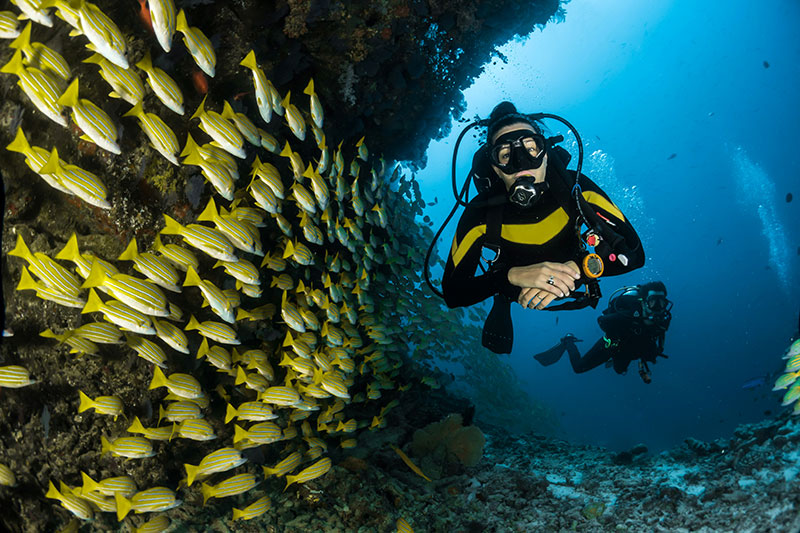
This philosophy is reflected in particular in the importance given to the no-decompression limits, which make it possible to plan dives within those limits. Divers can therefore ascend directly to the surface, at an appropriate ascent rate and following any safety recommendations, without being bound by mandatory decompression stops.
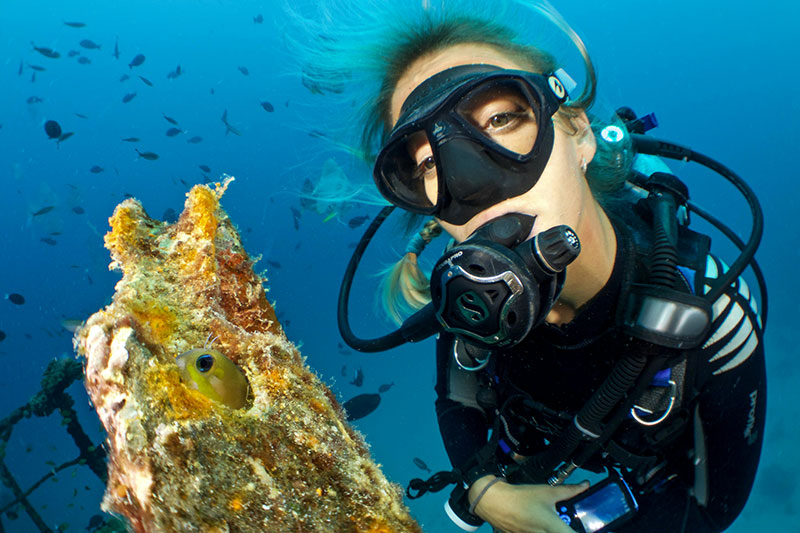
Conversely, a dive planned beyond these limits requires decompression stops, which act as a ceiling that must be respected: a direct ascent to the surface is then no longer possible without exposing the diver to additional risks.
These two approaches serve different goals and different dive profiles. At IslanDiving, we favor planning suited to the conditions, the divers’ level and safety, with an emphasis on dives within the no-decompression limits.
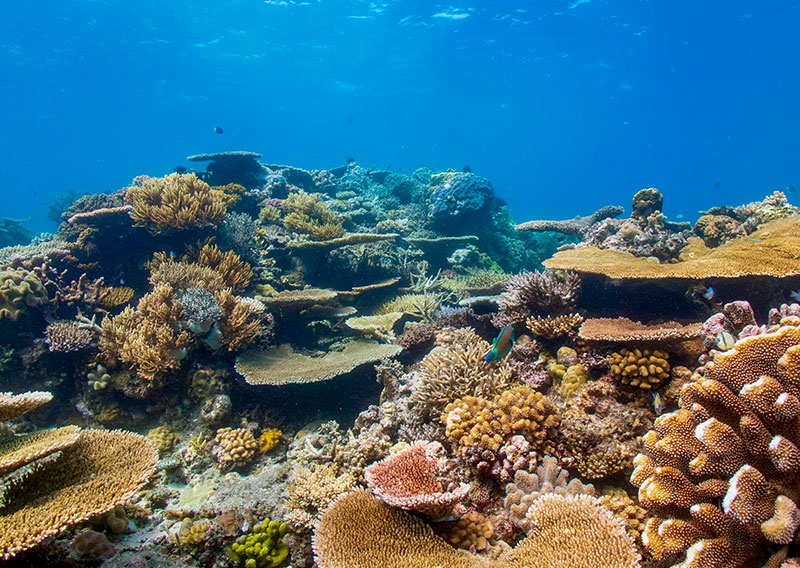
Beyond certification, PADI encourages a responsible approach to underwater exploration and invites every diver to play an active role in protecting the oceans.
At IslanDiving, we share this vision: learning to dive also means learning to know, respect and protect the marine environment.